

What Phoenix Small Business Owners Should Know About Buyer Financing Before Selling Their Business
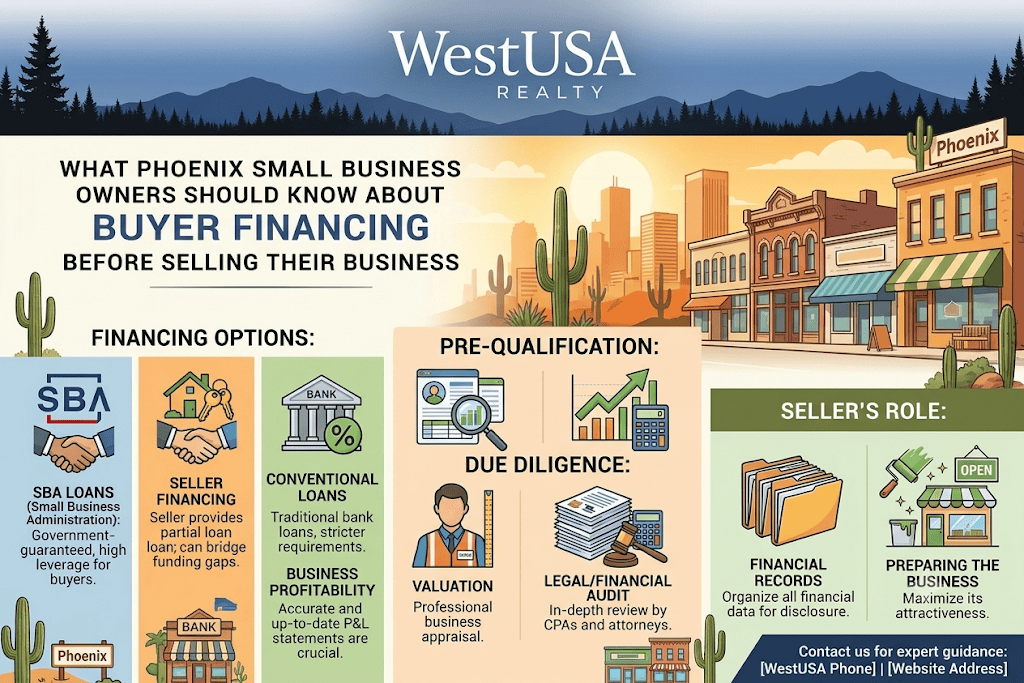
Understanding Why Buyer Financing Matters When Selling a Business in Phoenix
Selling a small business involves more than finding an interested buyer and agreeing on a purchase price. One of the most important factors influencing whether a transaction reaches completion is the buyer’s ability to secure sufficient financing. Even when a prospective buyer has the experience, motivation, and financial resources to operate a business successfully, obtaining the necessary funding can present unexpected challenges. For small business owners in Phoenix, Arizona, understanding how buyer financing works can make the selling process more predictable and help prevent avoidable delays. We recognize that business owners have invested years of hard work into building their companies, and they deserve a sale process that protects their financial interests. At Valued Business Exits, we help business owners understand the factors that influence business transactions so they can make informed decisions when preparing for an exit.
How Buyers Typically Finance a Small Business Acquisition
Buyers use several financing methods when purchasing an established small business, and each option comes with different requirements, costs, and implications for the seller. Some buyers use personal savings or investment capital to fund the entire purchase, while others combine their available cash with loans or financing provided by the seller. Traditional bank loans may be available to qualified buyers, although lenders generally evaluate the business’s financial performance, the buyer’s creditworthiness, collateral, and repayment capacity before approving a loan. Small Business Administration-backed financing, particularly through the SBA 7(a) loan program, can also support eligible acquisitions when the buyer and transaction satisfy the applicable requirements. Seller financing provides another potential solution by allowing the seller to receive a portion of the purchase price over time rather than collecting the entire amount at closing. Understanding these financing structures helps Phoenix business owners evaluate offers more accurately and identify which prospective buyers have a realistic path toward completing the acquisition.
What Phoenix Sellers Should Know About SBA 7(a) Acquisition Loans
SBA 7(a) loans are an important financing option for eligible buyers purchasing an existing business in Phoenix and throughout Arizona. These loans are issued by participating lenders, with the Small Business Administration providing a guarantee on a portion of the lender’s exposure under applicable program rules. The guarantee can encourage participating lenders to consider qualifying transactions that might otherwise be difficult to finance under conventional lending arrangements. However, an SBA-backed loan is not automatically approved simply because a business has a strong reputation or consistent revenue. Lenders still review the buyer’s financial position, management experience, proposed equity contribution, business cash flow, repayment capacity, and the overall structure of the acquisition. We encourage sellers to understand the basic requirements of acquisition financing early because the availability of suitable funding can influence the buyer pool, transaction timeline, and terms that ultimately become part of the purchase agreement.
Why a Business’s Cash Flow Influences Financing Approval
A business’s cash flow is one of the most important considerations when a buyer applies for acquisition financing. Lenders need reasonable evidence that the company generates enough cash to cover operating expenses, existing obligations, the buyer’s expected loan payments, and other financial commitments after the acquisition. A business can report substantial annual revenue without necessarily generating sufficient cash to support a new owner’s debt obligations. For this reason, lenders commonly examine historical profit and loss statements, business tax returns, balance sheets, and other financial records to understand the company’s underlying financial performance. They may also review seller’s discretionary earnings or other appropriate cash flow measures, depending on the size and nature of the business and the lender’s underwriting methodology. Phoenix business owners who maintain accurate records and can clearly explain their company’s financial performance are generally better positioned to help prospective buyers and lenders evaluate the opportunity.
Preparing Financial Records Before Bringing Your Business to Market
Preparing financial documentation before marketing a business can reduce uncertainty during the financing process and help establish credibility with qualified buyers. Sellers should organize several years of business tax returns, monthly profit and loss statements, balance sheets, bank statements, and supporting documentation for significant expenses. Depending on the business, additional records may include payroll reports, customer concentration information, inventory valuations, equipment schedules, outstanding loan statements, and lease agreements. Owners should also identify expenses that may be discretionary or genuinely nonrecurring and prepare reasonable supporting evidence for any proposed adjustments to reported earnings. These adjustments should be transparent and defensible because lenders may independently determine which expenses can be added back when evaluating the company’s cash flow. At Valued Business Exits, we believe that financial preparation is a practical step toward presenting a business professionally, answering buyer questions efficiently, and reducing the risk of financing complications later in the transaction.
How the Purchase Price Affects a Buyer’s Financing Options
The asking price of a business directly influences the amount of financing a buyer may need and whether the acquisition can satisfy a lender’s underwriting requirements. When a business is priced significantly above what its documented earnings and market position support, prospective buyers may struggle to obtain enough funding to complete the purchase. A higher purchase price can also increase the buyer’s required cash contribution, expected loan payments, and financial exposure after closing. Conversely, a price supported by credible financial records, appropriate valuation methods, and comparable market evidence can make the opportunity easier to evaluate. Business valuation should account for factors such as earnings, growth prospects, customer relationships, recurring revenue, industry conditions, assets, and the degree to which the company depends on its current owner. We encourage Phoenix owners to approach pricing strategically because a realistic valuation can attract better-qualified buyers and improve the likelihood that an acceptable offer will translate into a completed sale.
The Buyer’s Down Payment and Personal Financial Strength
A buyer’s available cash is an important component of many business acquisition transactions, particularly when outside financing covers only part of the purchase price. Lenders may require the buyer to contribute a specified amount of equity, although the exact requirement depends on the loan program, lender policies, transaction structure, and individual circumstances. Buyers must also consider costs beyond the purchase price, including professional fees, working capital, inventory needs, insurance, and funds required to maintain operations after closing. A buyer who appears interested but has insufficient liquid capital may encounter difficulties meeting lender requirements or supporting the business during its first months under new ownership. Sellers should therefore evaluate a prospective buyer’s financial readiness rather than relying exclusively on enthusiasm, industry knowledge, or verbal assurances. Before proceeding too far, owners can work with qualified transaction professionals to establish whether the buyer has a credible financing plan and sufficient resources to pursue the acquisition.
Seller Financing and Its Role in Closing a Business Sale
Seller financing can help bridge the gap between the purchase price and the amount a buyer can obtain through conventional lending or other funding sources. Under this arrangement, the seller agrees to receive part of the purchase price through scheduled payments after closing, typically under a promissory note that specifies repayment terms. This structure may allow a buyer to acquire a business that would otherwise be difficult to purchase using available cash and third-party financing alone. It can also demonstrate that the seller has confidence in the company’s future performance, although the existence of seller financing should never be treated as a guarantee of success. For the seller, the principal disadvantage is that part of the sale proceeds remains exposed to repayment risk, which may become significant if the buyer experiences financial difficulties. Any seller-financed arrangement should be reviewed by qualified legal and tax professionals, with careful attention to interest, maturity, default remedies, collateral, personal guarantees where appropriate, and the interaction between the seller note and any senior lender’s requirements.
What Happens When a Buyer Cannot Secure Financing?
Financing problems can arise even after a buyer submits an attractive offer and both parties begin negotiating the final transaction documents. A lender may identify weaknesses in the business’s financial records, determine that the buyer does not meet its underwriting standards, or conclude that the proposed purchase price does not adequately support the requested loan. An application may also be delayed because documents are missing, the buyer’s financial circumstances change, or the lender requires additional information before making a decision. When financing is denied, the buyer may attempt to obtain funding from another lender, contribute additional equity, negotiate a lower purchase price, or explore seller financing. However, these alternatives are not always feasible, and prolonged negotiations can create additional costs and uncertainty for the seller. We recommend addressing financing feasibility early, maintaining clear communication throughout the transaction, and avoiding assumptions that an accepted offer guarantees a successful closing.
Understanding Financing Contingencies in the Purchase Agreement
A financing contingency establishes conditions under which a buyer may be permitted to withdraw from a transaction if specified financing requirements are not satisfied. The wording of this provision matters because it can define application deadlines, required documentation, approval milestones, notice obligations, and the consequences of a lender’s decision. Sellers should understand whether the agreement gives the buyer a broad opportunity to terminate the transaction or requires the buyer to meet specific obligations while pursuing financing. The purchase agreement should also address how the parties will handle extensions, changes in loan terms, and requests to renegotiate the purchase price if the original financing plan becomes unavailable. These provisions should be negotiated carefully because an unclear contingency can create disputes or leave the seller uncertain about how long the business will remain tied to one prospective buyer. A qualified business transaction attorney can help establish appropriate protections while ensuring that the agreement reflects the actual circumstances of the proposed sale.
Why Commercial Leases Can Affect Buyer Financing
For many small businesses in Phoenix, the commercial property lease is an important part of the acquisition because the company depends on its existing premises to serve customers and generate revenue. A buyer’s lender may review the lease term, renewal options, rental obligations, assignment provisions, and the landlord’s requirements before determining whether the transaction is financeable. If the lease expires soon after the proposed closing or requires landlord approval for an ownership transfer, the lender may request additional documentation or evidence that the buyer can continue operating from the location. Certain businesses may also require specific zoning approvals, permits, licenses, or other authorizations that cannot automatically be transferred to a new owner. Sellers should identify these issues early and determine what approvals or documentation may be necessary before the transaction reaches its final stages. Preparing the lease and relevant operating documents in advance can reduce uncertainty and help prevent a financing approval from being delayed by an unresolved property-related issue.
How Inventory, Equipment, and Working Capital Influence the Deal
The purchase of a business may involve more than acquiring its name, customer relationships, and ongoing operations. Depending on the industry and transaction structure, the buyer may also need to purchase inventory, machinery, vehicles, furniture, technology, or other operating assets. These items can affect the overall purchase price and may require additional funds beyond those needed to acquire the company’s goodwill and ongoing earning capacity. Lenders may distinguish between different asset categories when evaluating collateral, and the value assigned to inventory or equipment may not match the amount a seller expects to receive. Buyers also need adequate working capital to pay employees, purchase supplies, cover rent, and manage normal operating expenses while revenue continues to flow through the business. Phoenix sellers should clarify what is included in the purchase price, how inventory will be valued at closing, and whether additional working capital will be required so that both parties can evaluate the total financial commitment accurately.
Demonstrating Business Stability to Prospective Buyers and Lenders
A company that operates consistently and maintains reliable financial reporting can be easier for a prospective buyer to evaluate than one with unpredictable earnings or incomplete records. Buyers and lenders often want to understand whether the business can continue generating revenue after the current owner exits. Dependence on a single major customer, a small number of suppliers, or the owner’s personal relationships can introduce uncertainty into that assessment. Documented operating procedures, established management responsibilities, customer retention data, recurring contracts where applicable, and a clear transition plan can help demonstrate that the business has an operating structure beyond its current owner. Sellers should also be prepared to explain unusual revenue fluctuations, significant changes in expenses, and any circumstances that could affect future performance. By addressing these issues before going to market, business owners can provide a more complete picture of the opportunity and help prospective buyers build a financing application supported by credible information.
Choosing Between an All-Cash Offer and a Financed Offer
An all-cash offer may appear more attractive because it can reduce dependence on lender approval and potentially simplify the closing process. However, an offer should not be evaluated solely on whether the buyer intends to use cash or financing. A financed offer from a financially qualified buyer may provide a competitive purchase price and acceptable closing conditions, while an all-cash offer may still contain significant contingencies, extended due diligence periods, or other terms that introduce uncertainty. Sellers should examine the proposed deposit, proof of funds, financing commitments, due diligence provisions, closing schedule, and any obligations that continue after closing. They should also consider whether the offer requires seller financing, an earnout, or other deferred consideration that affects when the proceeds will actually be received. We help owners recognize that the strongest offer is generally the one that combines a suitable economic outcome with credible funding, manageable risk, and terms that support a realistic path to closing.
Protecting Confidentiality During the Financing Process
Buyers and lenders need access to sufficient information to evaluate a business, but sellers should not distribute sensitive financial and operational records without appropriate safeguards. Early discussions can begin with a carefully prepared overview that communicates the company’s general performance, business model, and acquisition opportunity without revealing unnecessary confidential details. More sensitive documents should be shared through a controlled process after the prospective buyer has been appropriately qualified and confidentiality arrangements have been established. Depending on the transaction, sellers may also need to protect employee information, customer records, supplier agreements, trade secrets, and other commercially sensitive material. A secure document-sharing process can help maintain accountability and reduce the risk of confidential information being circulated beyond the intended parties. Business owners should work with their transaction advisors and legal counsel to determine which documents are necessary at each stage and how disclosure obligations should be managed.
Working With Experienced Business Sale Professionals in Phoenix
Selling a business often requires coordination among the seller, prospective buyer, lender, accountant, attorney, landlord, and other professionals involved in the transaction. Each participant has a different responsibility, and delays can occur when financial questions, legal requirements, or approval processes are not addressed in the correct sequence. An experienced business sale professional can help organize the process, prepare the company for market, communicate with prospective buyers, and identify financing concerns before they become major obstacles. Professional guidance can also help sellers compare offers, assess proposed seller financing, understand transaction milestones, and manage negotiations without losing sight of their financial objectives. While no advisor can guarantee loan approval or a completed sale, a structured process can help business owners make more informed decisions and respond more effectively when challenges arise. At Valued Business Exits, our focus is on helping business owners navigate the sale process with greater clarity, realistic expectations, and attention to the factors that can influence a successful exit.
Preparing for a Successful Business Exit in Phoenix
The most effective time to consider buyer financing is before a business is formally listed for sale, rather than after an offer has been accepted. Early preparation allows owners to review their financial records, evaluate an appropriate asking price, identify potential lease or licensing issues, and understand which buyer profiles may be most suitable for the opportunity. It also creates an opportunity to discuss conventional lending, SBA-backed acquisition financing, cash purchases, and seller financing with qualified professionals before negotiations become time-sensitive. Sellers should remember that the availability of financing depends on the buyer, the business, the lender, and the transaction’s specific terms, so no single funding method will be appropriate for every sale. By preparing thoroughly and evaluating offers based on both financial strength and transaction structure, Phoenix small business owners can improve their ability to move from initial interest toward a well-supported closing. A thoughtful exit strategy can help protect the value built over years of ownership while positioning the business for a smooth transition to its next chapter.
Buyer financing is one of the most significant considerations for Phoenix small business owners preparing to sell their companies. Understanding how lenders assess cash flow, purchase prices, buyer equity, leases, working capital, and repayment capacity can help sellers identify potential obstacles before they threaten a transaction. It is equally important to recognize the risks associated with financing contingencies, seller notes, and offers that depend on approvals that have not yet been secured. Organized financial documentation, realistic pricing, careful buyer qualification, and professional guidance can make the process more efficient and help both parties establish clear expectations. Valued Business Exits encourages business owners to treat financing readiness as a central part of their exit preparation rather than a last-minute consideration. With appropriate planning and a well-managed sale process, owners can approach negotiations with greater confidence and work toward a transaction that reflects their financial goals and the value of the business they have built.